
For artists and labels, pitching a new release raises a few immediate questions: Which playlists are a good fit? Who’s choosing the music?
And how do you reach them? PlaylistLookup, run by Niels Klingenberg, brings that search into one place with a database of Spotify playlist curator contacts.
The platform also includes radio station and label databases, along with a playlist health check. The tools designed to help users research opportunities and make more informed decisions about where to focus their outreach.
In this Q&A, Klingenberg discusses why he started PlaylistLookup and how artists and labels can use it.
We also explore what makes playlists appealing to listeners, valuable to artists and interesting to brands, plus his perspective on where music streaming is headed.

What inspired you to start PlaylistLookup? Was there a particular experience that made you realize artists and labels needed a better way to connect with playlist curators?
I grew up in a family that embraced music, and I’ve always kept a huge passion for it. I also love building things, so I decided early on that one day I wanted to start something in the music industry.
I didn’t start with the current idea. It took shape over time. As I got to know more people in the industry, I saw how hard and expensive it is for independent artists to promote themselves, stand out, and get their music in front of a bigger audience.
So we built PlaylistLookup to give artists the tools to do that themselves, without paying for an expensive marketing agency.
For someone discovering PlaylistLookup for the first time, how does it work? Could you walk us through how an artist or label might use it to find relevant playlists and connect with the curators behind them?
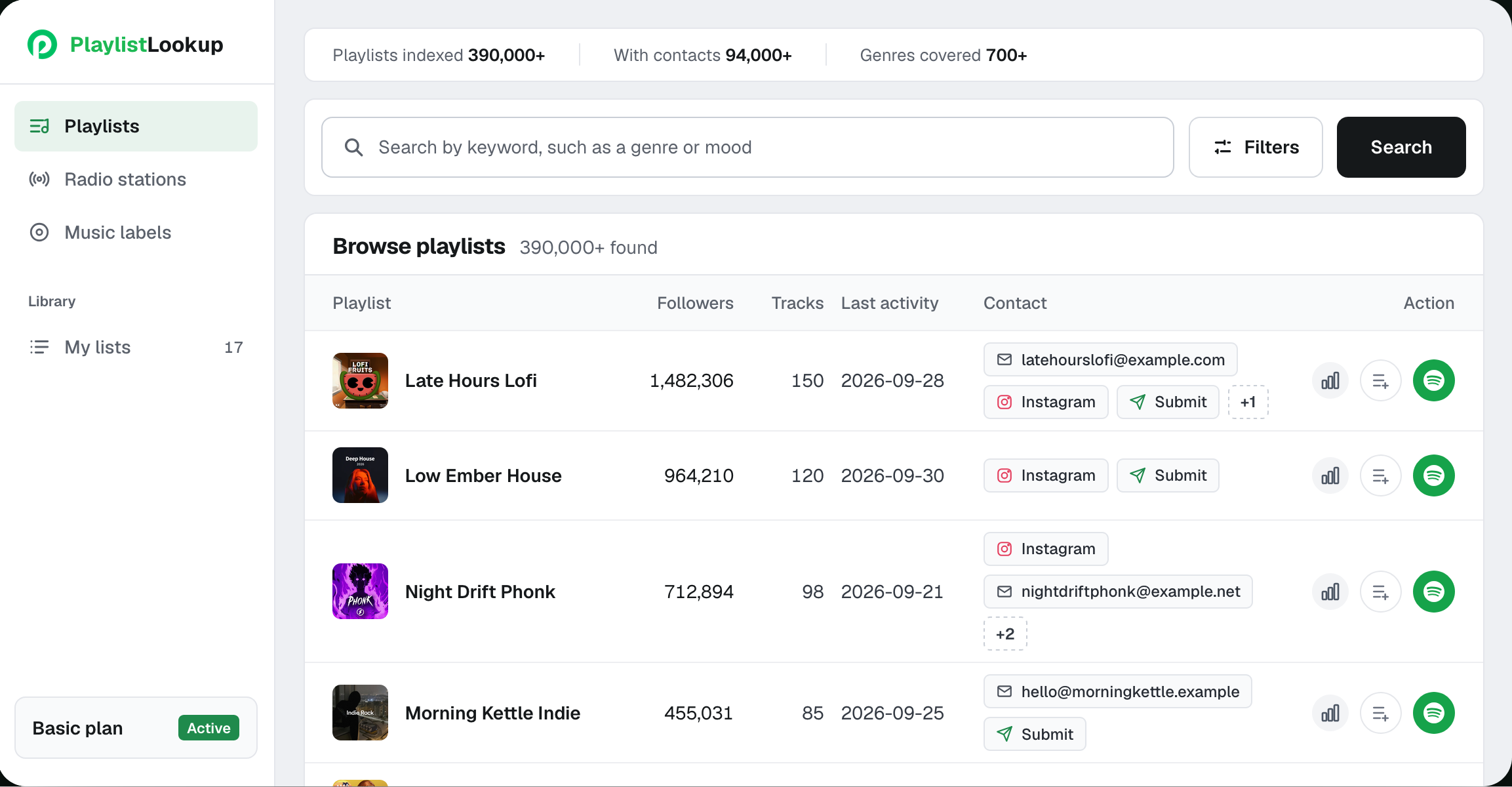
You search for playlists, radio stations or record labels by genre, mood, or similar tags, and filter down to ones that fit your music. For each result you can see the contact details, such as an email address, social profile, website, or submission link, plus a health check that estimates whether a playlist has active listeners.
Save the good ones to a list in your account and work through it. Then reach out directly to the curators.
Why do you think playlists have become such a popular way to discover and listen to music? How does their value differ for artists seeking exposure, fans looking for their next favorite song, and brands trying to connect with an audience?
For artists, a playlist is a chance to get your music heard by people who already listen to that kind of music, without having to build an audience from zero.
For fans, it’s a simple way to discover new songs without doing much research themselves. You’re usually listening to a playlist with tracks in a genre you already like.
The potential reach on streaming platforms is also huge. Spotify alone has hundreds of millions of monthly listeners. That makes playlists valuable for both artists and listeners: there’s a lot of activity, and it brings together many different kinds of people and tastes from all over the world.
PlaylistLookup lets users contact curators directly and offers radio station contacts, label contacts and playlist health checks. What do you think makes that combination useful, and what should someone realistically expect from using the platform?
PlaylistLookup started as a platform where people could only connect with playlist curators, but over time we wanted to expand it. With our tools, we want to give independent artists the chance to reach as many influential people and organizations in the music industry as possible with limited resources, so they can share their music with a bigger audience on their own.
You can see our platform as a way to get in touch with people in the music industry and build valuable connections that help you grow your music career.
For an artist, getting onto a playlist is one thing; turning that exposure into lasting fans is another. What separates a genuinely valuable playlist placement from one that simply adds streams, and how should artists judge whether their outreach is working?
It’s important to pitch your music to curators whose playlists attract listeners with a taste that closely matches your own genre. When that’s the case, the playlist’s listeners are more likely to genuinely enjoy your track, which makes it more likely that they become fans.
I always advise listening to a few tracks on the playlist before you submit your own.
Outreach can also be valuable when a curator doesn’t add your track to a playlist.
I recommend being personal and unique in your message and trying to build a real connection with the curator. Those connections can help you with your next release.
Looking ahead, how do you think music streaming will change as AI-generated music and personalized recommendations evolve—and what place will human playlist curators have in that future?
To me, music is feeling, emotion, and creativity, the kind that only a person has. Algorithms will keep getting better at predicting what we want to hear, and AI will fill more of the background, but that is not the same as the connection people feel with a song made by someone who lived it.
That’s why the human side of this industry stays valuable, and why a curator with real taste, who puts a playlist together with a point of view, will keep a place that a recommendation engine can’t replace.